The AI foundation is live. The compound thesis is holding up in production. The first wave of enterprise clients are seeing measured returns. So this is what we're building next, not what we predict.
Where We Stand
RIVER Group launched into the market with a specific thesis: enterprise AI should compound. Shared foundations, not isolated projects. Platform economics, not project economics. Sovereignty by design, not as an afterthought. Cultural intelligence, not cultural compliance.
That thesis is operational. The platform is in production. The results validate the approach. Deployment times decreasing with each engagement. Per-capability costs falling. Quality improving as the knowledge layer grows.
Now we're building on that foundation. This is an extension of what's proven, not a pivot away from it.
The Next Twelve Months
Agentic Capability at Scale
Our agentic architecture is in early production. Agents that don't just answer questions but take actions: processing claims, triaging complaints, monitoring compliance, managing documents through multi-step workflows.
The next step is scaling this capability across more domains and more complex workflows. We're building:
- Multi-agent orchestration. Workflows where multiple AI agents collaborate, each handling their speciality. A document processing agent hands off to a classification agent, which triggers a compliance agent, which alerts a human reviewer. Coordinated, monitored, governed.
- Agent development frameworks. Tools that make building new agents faster. Templated architectures, pre-built tool libraries, evaluation harnesses, and governance wrappers that let us (and eventually our clients' teams) build new agents in days, not weeks.
- Agent operations. The monitoring, evaluation, and management infrastructure specific to agentic workflows. Different from monitoring traditional AI because agents make sequences of decisions, and the quality of the sequence matters as much as individual decisions.
Sector Depth
The platform works across sectors. But depth within sectors creates compounding advantages that breadth alone doesn't. We're investing in deeper capability in three sectors:
Health. Clinical documentation, patient summaries, health data analysis, and clinical decision support. NZ's health system is under pressure, and AI can meaningfully extend clinical capacity. Our work with health clients has built a knowledge layer specific to NZ clinical contexts, privacy requirements, and cultural considerations.
Government. Policy analysis, regulatory impact assessment, compliance monitoring, and citizen services. NZ government is moving from exploration to deployment, and the organisations that can deliver production-grade AI with proper governance, sovereignty, and indigenous data considerations will define this market.
Financial services. Claims processing, risk assessment, compliance monitoring, and document intelligence. Financial services has the data, the use cases, and the regulatory drivers for enterprise AI at scale.
The Knowledge Network
The compound thesis operates within organisations: each AI capability makes the next one faster. But it also operates across organisations, within the constraints of data sovereignty and privacy.
We're building what we call the Knowledge Network: patterns, frameworks, and anonymised insights that transfer across client engagements. Not client data. Never client data. But the knowledge about how to solve specific types of problems.
When we solve a document classification challenge for a health client, the pattern (not the data) improves document classification for an insurance client. When we build a compliance monitoring framework for government, the architecture (not the content) accelerates compliance monitoring for financial services.
This is already happening informally. We're making it systematic.
Indigenous AI as Standard
Hakamana AI is not a separate product or a special initiative. It's a standard capability of the platform. Indigenous data sovereignty, cultural intelligence, and community benefit are built into the foundation, available to every deployment.
The next step is deepening this capability:
- Expanded te reo Māori language processing with community-validated datasets
- Pacific language support (Samoan, Tongan, Cook Islands Māori) for NZ's Pacific communities
- Cultural intelligence frameworks for health, education, and social services
- Indigenous data governance tooling that makes sovereignty practical, not just principled
This is important work. It's also distinctive work. Few AI companies anywhere in the world have this capability. For NZ enterprise, it's not optional. It's essential.
Platform Access
Today, RIVER Group's platform is accessed through our delivery engagements. We build and deploy AI capabilities on the platform for enterprise clients. This model works. It's also a bottleneck.
We're exploring how to provide platform access more broadly:
- Managed AI services where clients run their own capabilities on our platform with our operational support
- Platform-as-a-service for organisations with internal AI teams that need enterprise-grade infrastructure without building it from scratch
- Module marketplace where proven AI capabilities can be deployed with configuration rather than custom development
These models are in design, not production. The priority is getting the model right before scaling it. A platform that's reliable for twenty clients is more valuable than one that's unreliable for a hundred.
The Bigger Picture
The vision for RIVER Group hasn't changed since we launched. Enterprise AI in Aotearoa should be sovereign, compound, and culturally intelligent. It should be built by people who understand the NZ market, respect NZ values, and deliver to enterprise standards.
What's changed is evidence. We're no longer arguing from theory. We're arguing from production. The platform works. The economics compound. The governance holds. The cultural intelligence differentiates.
The next twelve months are about scaling what works, deepening what differentiates, and opening access to what we've built.
What We're Not Building
Clarity about what we're building requires clarity about what we're not building:
- We're not building foundation models. That's a multi-billion dollar game for a few global companies. We orchestrate foundation models. We don't build them.
- We're not building consumer AI. Our focus is enterprise. The problems, the governance, the relationships, and the economics are different.
- We're not building AI for AI's sake. Every capability we build solves a specific business problem for a specific enterprise context. If AI isn't the right answer, we'll say so.
- We're not building offshore. RIVER Group is NZ-based, NZ-built, and NZ-focused. We'll serve international clients from NZ, but we're not relocating capability to chase scale.
The Invitation
If you're a NZ enterprise that wants to move from AI exploration to AI production, the platform is ready. If you're a government agency that needs AI with proper sovereignty and governance, the platform is ready. If you're an organisation serving Māori and Pacific communities that needs culturally intelligent AI, the platform is ready.
We're not promising what we might build. We're offering what we have built. Two years of engineering, testing, breaking, and rebuilding. A platform that compounds. A team of seniors that delivers. A commitment to NZ enterprise that's unconditional.
We built RIVER Group for this moment. It's about scaling the proof.
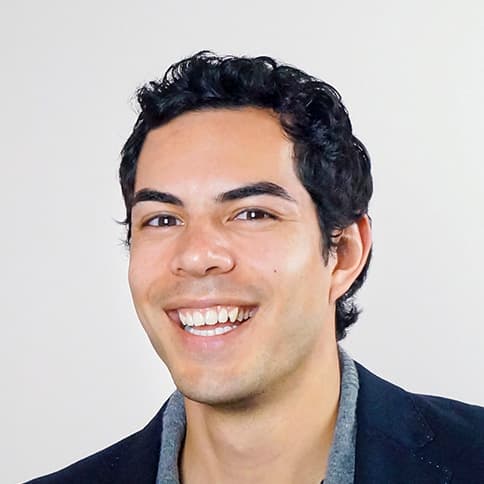 Isaac RolfeManaging Director
The foundation is laid, the proof points are measured, and the roadmap is clear. What comes next extends everything we've built: deeper, broader, and more accessible.
This is RIVER Group. This is what we're building next.